

Personalisation on the intranet: relevance instead of a flood of information
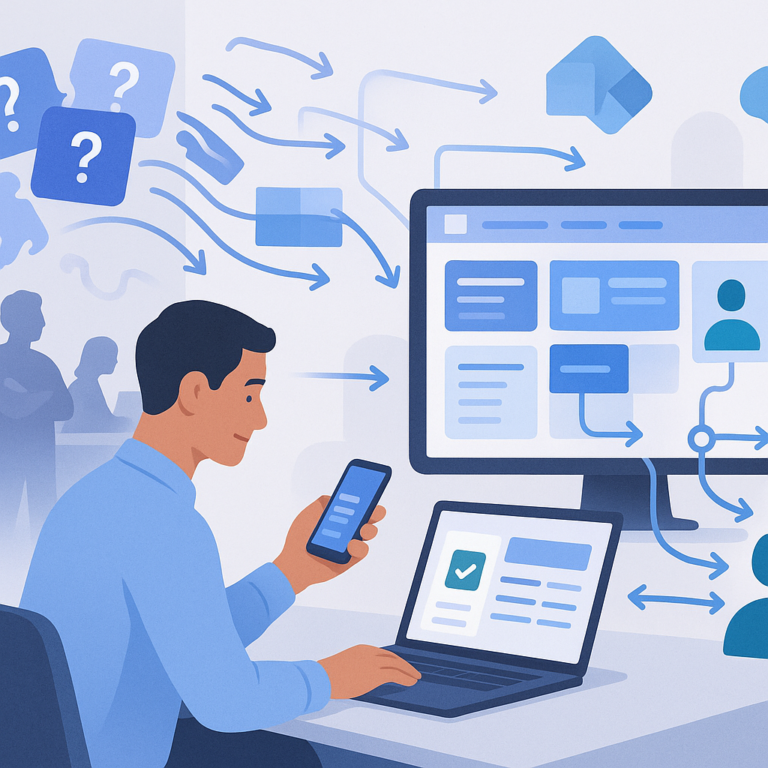
The same picture every morning: Employees open the intranet and are greeted by a flood of information. Company news from other locations, events from other departments, offers from the canteen 300 kilometres away. What is relevant for some people only generates noise for others. The result: important information is lost, the intranet becomes a compulsory exercise instead of a helpful work tool. This is frustrating for communications departments and intranet editorial teams - because despite the high level of effort, acceptance of the platform decreases.
Employees' expectations are clear: they want to quickly find exactly the information that is relevant to their role, their location and their current situation. No more, no less. Personalisation is no longer a nice-to-have, but a basic requirement for successful internal communication.
What companies are worried about
In our day-to-day work with Staffbase, we repeatedly encounter similar challenges:
Editorial teams produce more content, but reach fewer people. The larger and more decentralised a company is, the more difficult it becomes to distribute content in a targeted manner. A message that is important for production employees in Munich is of no interest to the marketing team in Hamburg - and vice versa.
The manual allocation of content is time-consuming and error-prone. Editors have to think about every news item: Who should see it? Which target group is affected? Should it only be visible for certain locations? These decisions take time and often lead to inappropriate results.
IT resources are tied up in customisation. If specialist departments want to play out specific information - such as shift schedules for production or sales figures for sales - they need technical support. The IT department becomes the bottleneck for every new use case.
Employees develop avoidance strategies. When the intranet becomes an information desert, people look for their own ways: Excel lists by e-mail, unofficial team channels, office grapevine. The central platform loses its function as a central source of information (single point of truth).
How the Widget Builder enables targeted personalisation
The Widget Builder for Staffbase addresses precisely these pain points. It enables editors and communication managers to display content in a target group-appropriate way - after the initial setup by IT, most adjustments can be made without further technical support.
No-code personalisation for the editorial team: With the Widget Builder, editorial teams can independently determine who sees which content. Targeting works on the basis of the user attributes stored in Staffbase - typically location, department, role or language. Individual profile attributes can also be used, provided they are available in the user profile. Once configured, the display runs automatically. A menu only appears for employees at the respective location, shift information only for the relevant teams, management news only for the relevant target group.
Practical example: anniversaries: A classic case of meaningful personalisation. With the Widget Builder, birthdays and company anniversaries can be displayed automatically and location-based. Employees at the head office see the anniversariesat their location, while at the same time the local colleagues at the regional branchesbe recognised internally. The editorial team can maintain the data centrally - for example via SharePoint lists that are populated from HR systems - and the data is automatically displayed in accordance with the stored rules.
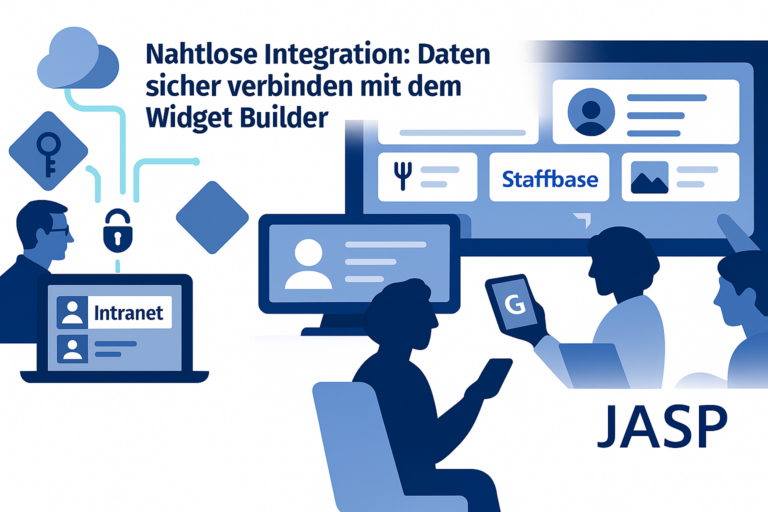
Integration instead of a stand-alone solution: The Widget Builder uses existing data sources from Microsoft 365 and SharePoint. Information does not have to be maintained twice. For example, a widget can access a SharePoint list directly and display the content filtered in the Staffbase intranet. This reduces maintenance effort and keeps information up to date.
Flexible application scenarios: A typical example is public transport departures for different locations. A live data source (e.g. a public API or SharePoint list) is integrated using the widget builder. Employees automatically see only the departures for their stop - based on their location attribute in the Staffbase profile. Other scenarios include personalised news feeds, team-specific dashboards, event countdowns for regional events or car park occupancy - without individual programming for each case.
How the technical implementation works
The integration is deliberately kept simple: The IT department handles the initial setup. It sets up the widget builder in Staffbase, configures the connection to the required data sources (e.g. SharePoint, Microsoft 365) and defines the available user attributes for targeting. The basic criteria for personalisation are also defined - which profile attributes are available, which data sources should be connected.
After that, the editorial team is in control. Communication managers can create new widgets, customise existing ones and define targeting rules via an intuitive user interface. No in-depth technical knowledge is required - the interface is intuitively designed and can be used independently after a short familiarisation period. The editorial team remains capable of acting, even if IT has other priorities at the moment.
Editorial changes - such as adjustments to the target group or content updates - are implemented in minutes, not weeks. A new location is added? The organisational structure changes? Such adjustments are made directly in the editing interface, provided the corresponding user attributes are available in Staffbase. IT remains the right point of contact for connecting new data sources or more complex requirements.
What specifically improves for everyone involved
For the editorial team personalisation with the Widget Builder means less effort and better results. Instead of creating separate news items for each location, a post is created and automatically delivered to the right target group. The editorial team can concentrate on strategic communication instead of getting lost in manual distribution logic.
For the IT department drastically reduces the number of individual enquiries. After the initial setup, most editorial use cases run without further technical support. IT is relieved of operational activities and can focus on strategic projects.
For the employees the intranet finally becomes what it should be: a helpful, clearly organised platform that provides exactly the information that is important at any given time. Less noise, more relevance. This not only increases satisfaction, but also the actual use of the platform.
Our project experience shows: When employees receive relevant content, the use of the platform increases significantly. The platform is evolving from a pure push channel (information is distributed) to a pull medium (employees actively search for information) because they know that they will find what they need there.
Conclusion: personalisation creates added value for everyone
Relevant communication is not a question of the quantity of content, but of the correct display. The Widget Builder for Staffbase provides editorial teams with the tools to place information in a targeted manner - after the initial IT set-up without technical hurdles and without lengthy processes.
JASP has over 20 years of experience in the Microsoft environment and in-depth expertise in Staffbase integration. As a reliable partner, we not only provide support during the initial setup, but also during ongoing operation - so that your internal communication is as personalised as your employees expect it to be.
Request a free demo
Would you like to see what personalised widgets can look like on your Staffbase intranet? We will show you in a non-binding demo how the Widget Builder actually works in your environment and which use cases are relevant for your company.

 Deutsch
  English (UK)
  Русский