
Internal communication 2026: Why employee apps are becoming the standard
22 January 2026
The conference room is full and the atmosphere is tense. The Head of Internal Communications presents the latest figures: Only 23 % of employees in production regularly read the company news. Emails disappear unread, the intranet is hardly ever opened on the desktop - and the management is calling for more commitment, better accessibility and faster information. „We need an employee app,“ says the IT manager. „But please one that we don't have to constantly maintain.“
This scene is currently being repeated in countless companies. In 2026, internal communication is facing a decisive turning point: employee apps are evolving from a nice-to-have to an indispensable standard for employee communication. However, the path to this is more rocky than many initially assume.
What really drives companies?
The challenges in internal communication have changed fundamentally. Three central problem areas dominate everyday life:
The accessibility gap is widening. In manufacturing companies, retail, logistics and healthcare, employees work without a fixed desk workstation. Email-based communication does not reach them. Notice boards are outdated. As a result, important information does not reach them, employees feel left behind and identification with the company decreases.
Expectations are rising rapidly. Employees are used to receiving personalised, mobile and real-time information in their private lives. What is taken for granted in everyday life with Netflix, Amazon or Instagram is also expected in the workplace. Another PDF email to download no longer corresponds to the reality of life. If you want to offer relevant, target group-orientated communication, you need modern channels.
IT and editorial resources are limited. At the same time, the reality is the opposite: communications departments are chronically understaffed, IT teams have mountains of projects ahead of them. Every new solution means setup, training, maintenance and support. There is a real concern that an employee app will become a time and resource waster instead of providing relief.
The turning point: Employee apps are coming of age
For a long time, employee apps were seen as complex IT projects with lengthy implementations. This perception is changing fundamentally. Modern platforms such as Staffbase have significantly simplified the introduction of employee apps. But here, too, practical experience shows that the app alone does not solve the problem.
The decisive factor is the Flexibility in operation. An employee app is only as good as the content it conveys - and the speed with which editorial teams can react to new requirements.
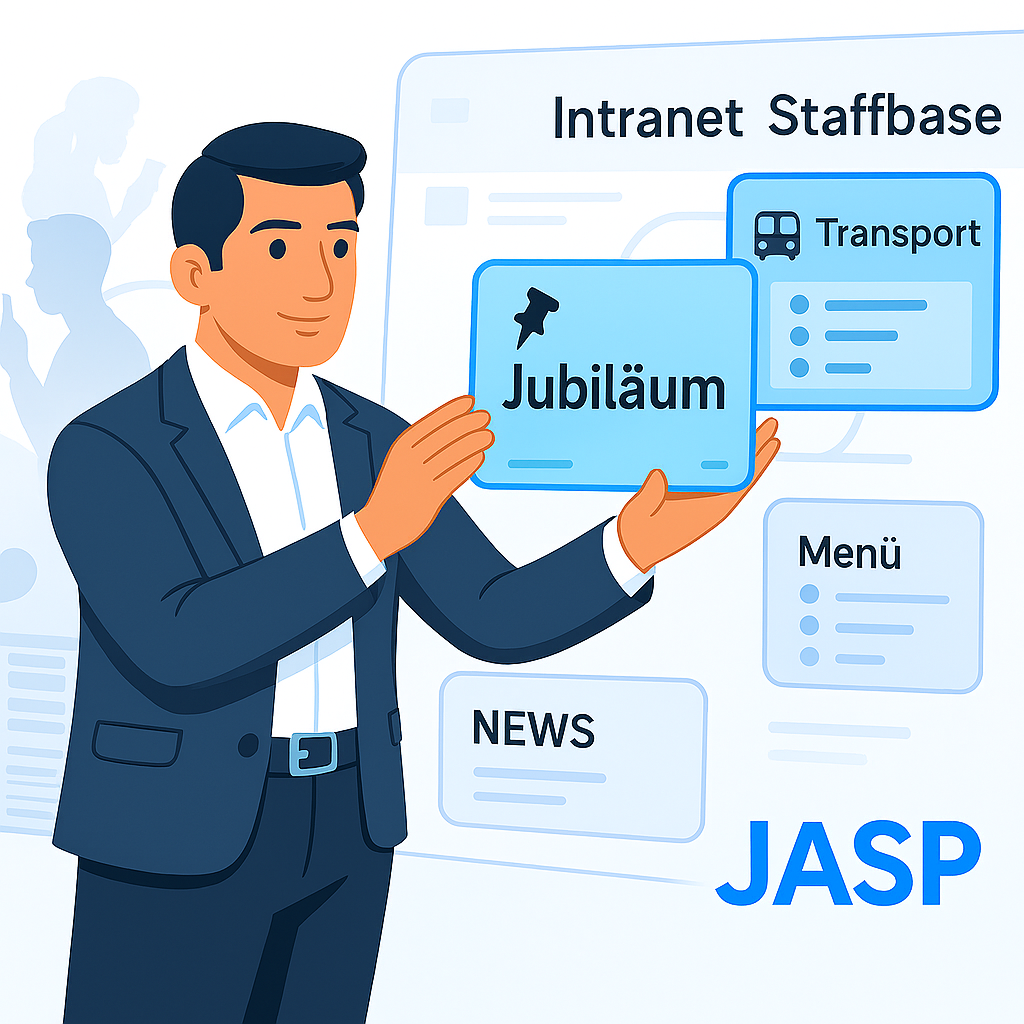
This is where it gets specific: a communications manager wants to send out personalised birthday greetings for all locations. The works council would like an overview of upcoming appointments. The canteen should show its menu directly in the app. Employees at the Hamburg site need the latest public transport departure times directly on the start page.
All understandable, everyday requirements. But in many companies, each of these adjustments means A ticket to IT, weeks of waiting time, possibly external development costs. This turns the app from a communication channel into a bottleneck.
Widget Builder: When editorial teams can design themselves
This is precisely where the Widget Builder for Staffbase on. The solution addresses the central dilemma: How can communication managers react flexibly and quickly to requirements without overloading IT?
The no-code approach makes all the difference. Editors create and maintain widgets independently - without programming, without IT tickets. That sounds like a promise, but it's a reality for companies that use Widget Builder.
A typical example from everyday life: a manufacturing company with several locations wanted to show the canteen menu in the Staffbase app - personalised by location. Previously, this meant that the canteen sent a PDF to the communications department every week, which then manually entered it into the app. A lot of work for both sides and often outdated information.
With the Widget Builder, the technical implementation was completed within one day - after the initial connection of the SharePoint data source by IT. The canteen continues to maintain the meal plan in its usual SharePoint list. The widget automatically displays the current plan - personalised by employee location. No more manual effort, always up-to-date data, satisfied users.
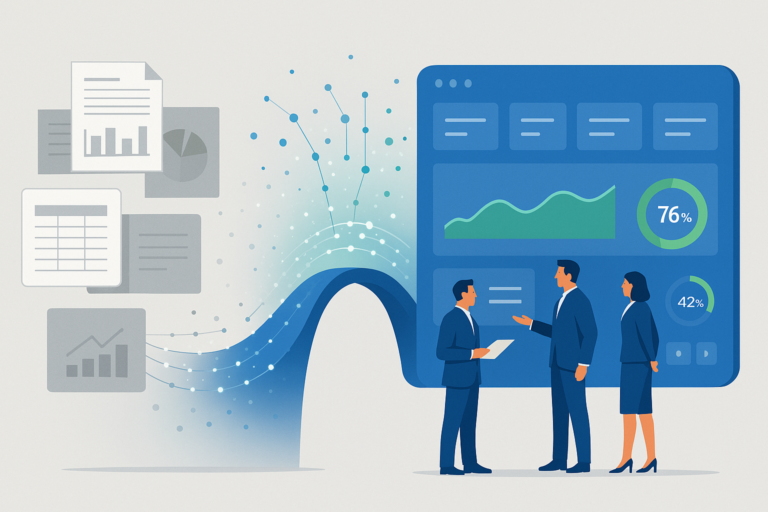
Integration with Microsoft 365 is the key. Many companies already make intensive use of SharePoint, Teams and other Microsoft services. The Widget Builder seamlessly links these existing data sources with Staffbase. Information does not have to be maintained twice and editorial teams can continue to work in familiar environments.
How does this work technically - without an IT marathon?
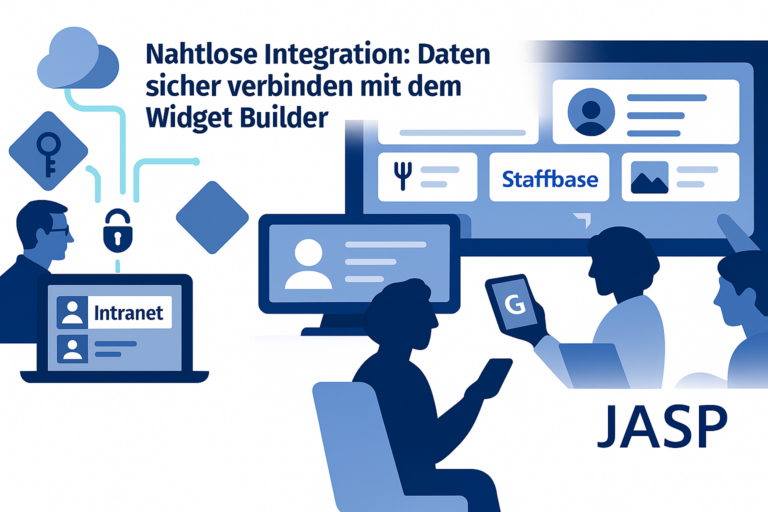
The implementation follows a clear pattern: IT sets up the connection between Staffbase and the Microsoft 365 data sources (e.g. SharePoint, Teams) once via Microsoft Graph. The setup follows standardised processes and usually takes a few hours to a few days - depending on your company's existing IT infrastructure and security guidelines.
The prerequisite is that the required Microsoft 365 authorisations (app registration, SharePoint access) are approved by the IT department - a standardised process that is established in most companies.
The editorial team then takes over: widgets are configured in the Widget Builder. What data should be displayed? For which target group? In which design? All settings are made via an intuitive interface.
The clear allocation of roles is crucial: IT provides the secure technical basis, the editorial team provides relevant content. Neither side is overburdened, both can concentrate on their core competences.
Another practical example: A logistics company wanted to show employees at different locations the relevant public transport connections. The widget can access public transport data and - based on the defined location assignments of the users - display the relevant departures. The editorial team can make changes to the displayed stops themselves at any time, without IT involvement.
What will change in concrete terms
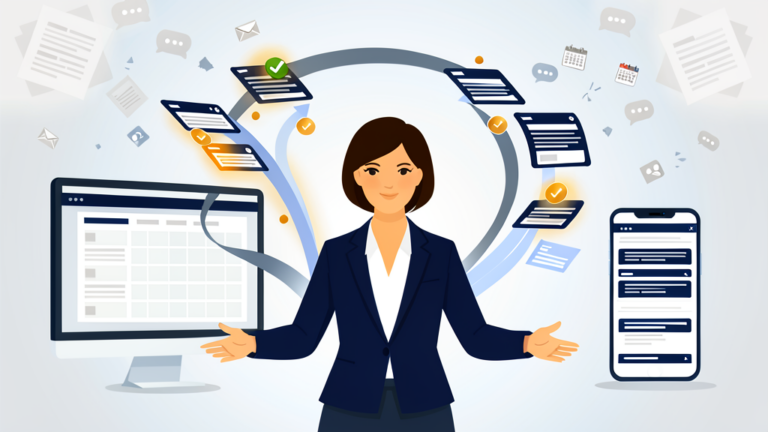
For the editors: Instead of waiting weeks for IT approvals, adjustments can be implemented immediately. New ideas can be tested quickly. The employee app evolves from a rigid channel to a lively, responsive medium. This not only increases speed, but also motivation within the team.
For the IT department: After the initial setup, there is no need for constant customisation requests. The editorial team works independently within a secure framework. IT resources are freed up for strategic projects instead of recurring small tasks.
For the employees: Content becomes more relevant and up-to-date. Instead of generic company news, they receive personalised information: Menu at their location, anniversaries in their department, events relevant to them. The app is evolving from a generic information channel into a targeted, personalised work tool.
These changes may seem small in detail. However, taken as a whole, they have a decisive effect: Experience from customer projects shows that the use of the employee app increases when content becomes more relevant and up-to-date. Employees open the app more often, stay longer and interact more. Internal communication reaches its target groups again.
Why 2026 is the turning point
The trend is unstoppable: Companies that want to reach their employees cannot ignore employee apps. Demographic change is reinforcing this trend. Younger employees expect mobile, digital communication as standard.
At the same time, the complexity of organisations will not decrease. More locations, diverse working time models, hybrid forms of work - all of this requires more flexible communication solutions.
The crucial question is no longer whether, but like. How can an employee app be operated in such a way that it reduces the workload instead of increasing it? How can editorial teams remain agile without overburdening IT?
The Widget Builder for Staffbase provides a pragmatic answer to this. Not a marvel, but solid craftsmanship: the right tools for people who design internal communication on a daily basis.
Conclusion: regaining the ability to act
Employee apps will be standard in 2026 because they solve a real problem: the accessibility and integration of all employees in modern, distributed organisations. But success depends on how they are implemented in the organisation.
With the Widget Builder for Staffbase, communication managers regain their ability to act. Instead of being dependent on IT capacities, they can design their app independently and according to their needs. Native integration with Microsoft 365 and Staffbase ensures that existing data sources are utilised - without duplicate maintenance or media disruptions.
JASP has over 20 years of experience in developing digital workplace solutions with Microsoft technologies. This expertise flows directly into the Staffbase extensions: tried and tested, reliable, designed for sustainable operation.
Internal communication in 2026 will be mobile, personalised and responsive. The tools for this are ready.
Would you like to see how the Widget Builder can enrich your Staffbase app?
→ Discover use cases now and find out which specific application scenarios other companies are already successfully implementing.
 Deutsch
  English (UK)
  Русский