Mail Merge in SharePoint Online – Step by Step Guide
How to create mail merges in SharePoint Online with Word and Excel. Guide for linking SharePoint lists with Word mail merge documents.
Creating mail merges in SharePoint Online presents challenges for many users. It becomes particularly tricky when both the Word document and the table are located within SharePoint. In this article, you’ll learn how mail merges can be created and printed despite these hurdles.
Current State of Technology
Linking with a list, such as an Excel table, under an http address is not supported by Microsoft. This has been clarified in various articles:
- MS Community Thread: Word Mail Merge with Excel document in a Sharepoint document library
- Microsoft Support Article: Data sources you can use for a mail merge
Instead, a local table is required:
- Microsoft Support Article: Mail merge using an Excel spreadsheet
This solution makes sense not only for us, but also for many other users, as shown by the now 2.5-year-old request:
- Microsoft Feedback Portal: Allow mailmerge using SharePoint lists and documents
Practical Solution
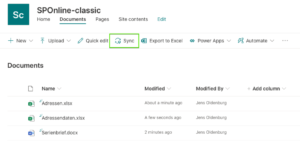
For the implementation, we use OneDrive to map a SharePoint list as a “local” drive. SharePoint Online’s sync functionality makes this possible:

This way, the data source is practically “local”:

Example of the Excel table structure:

Now we can start with the actual mail merge in a Word document. The document must be opened in the Word app, as the mail merge functionality is not available in the browser:

Alternatively, the document can be opened directly from Finder (Mac) or Windows Explorer (Windows).
In the Word document, we connect the data source, an Excel table…
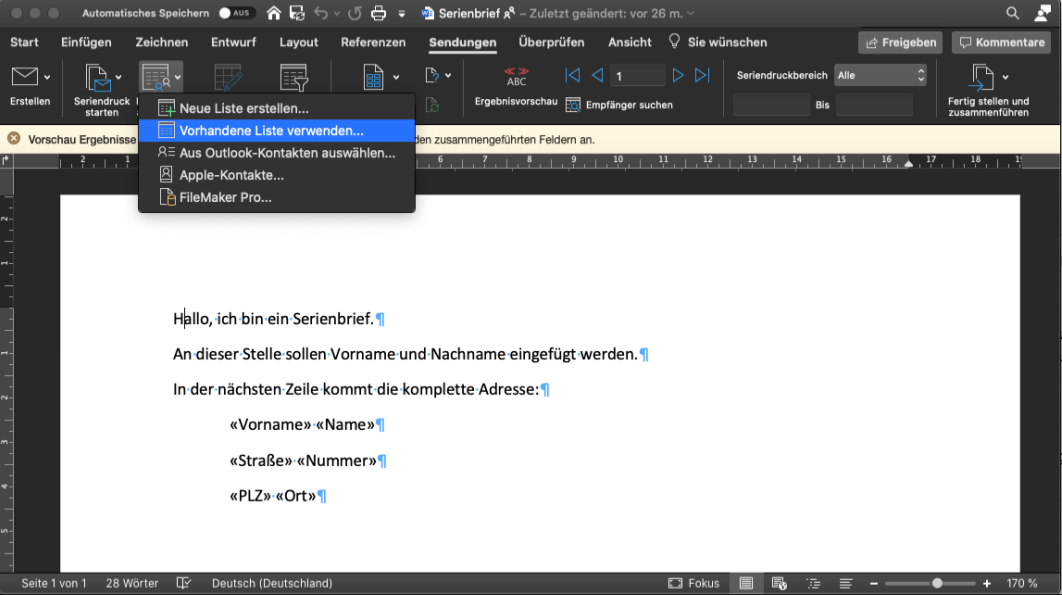
…select the file from OneDrive…

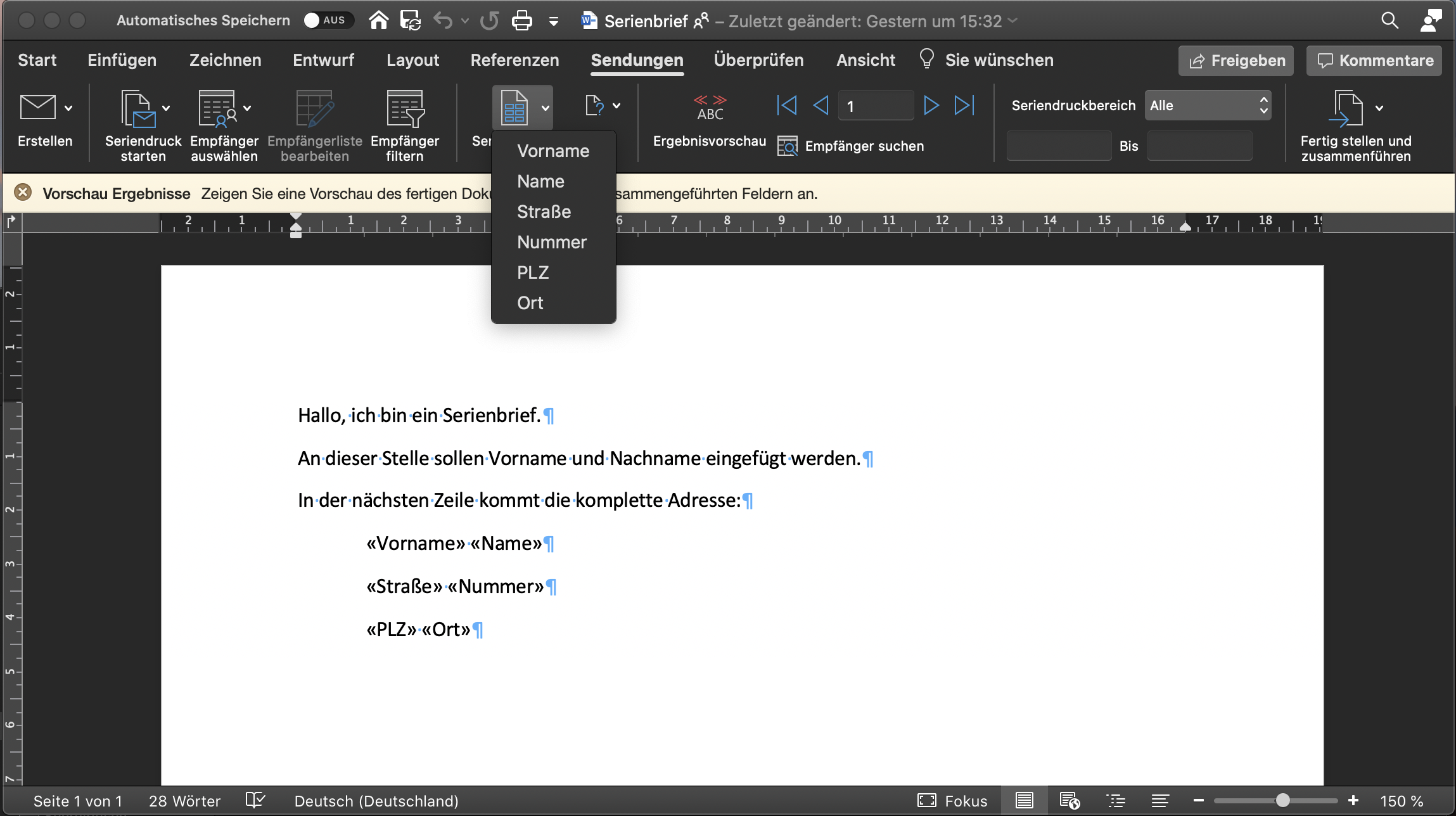
…and assign the fields…
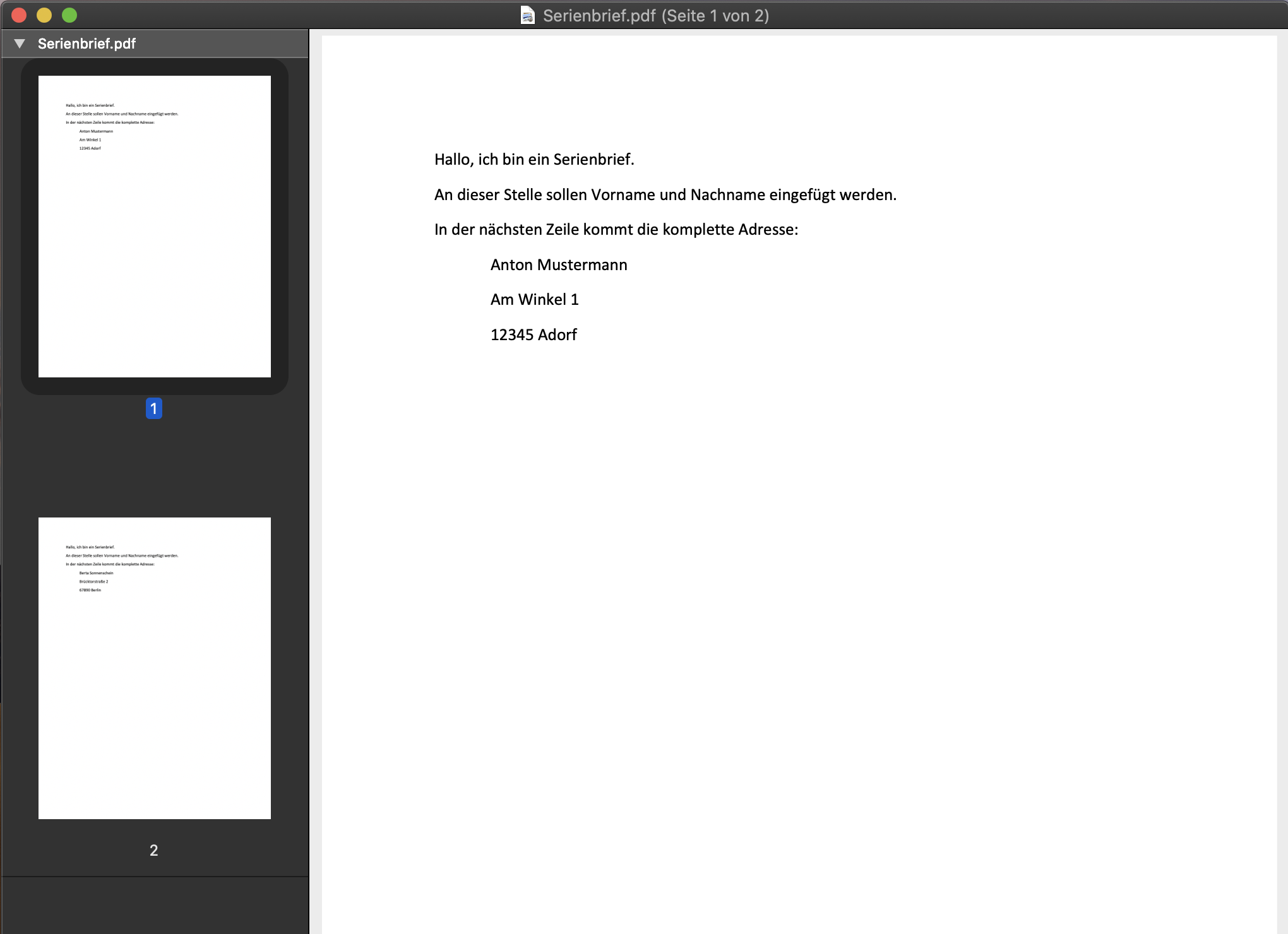
…to finally print everything:
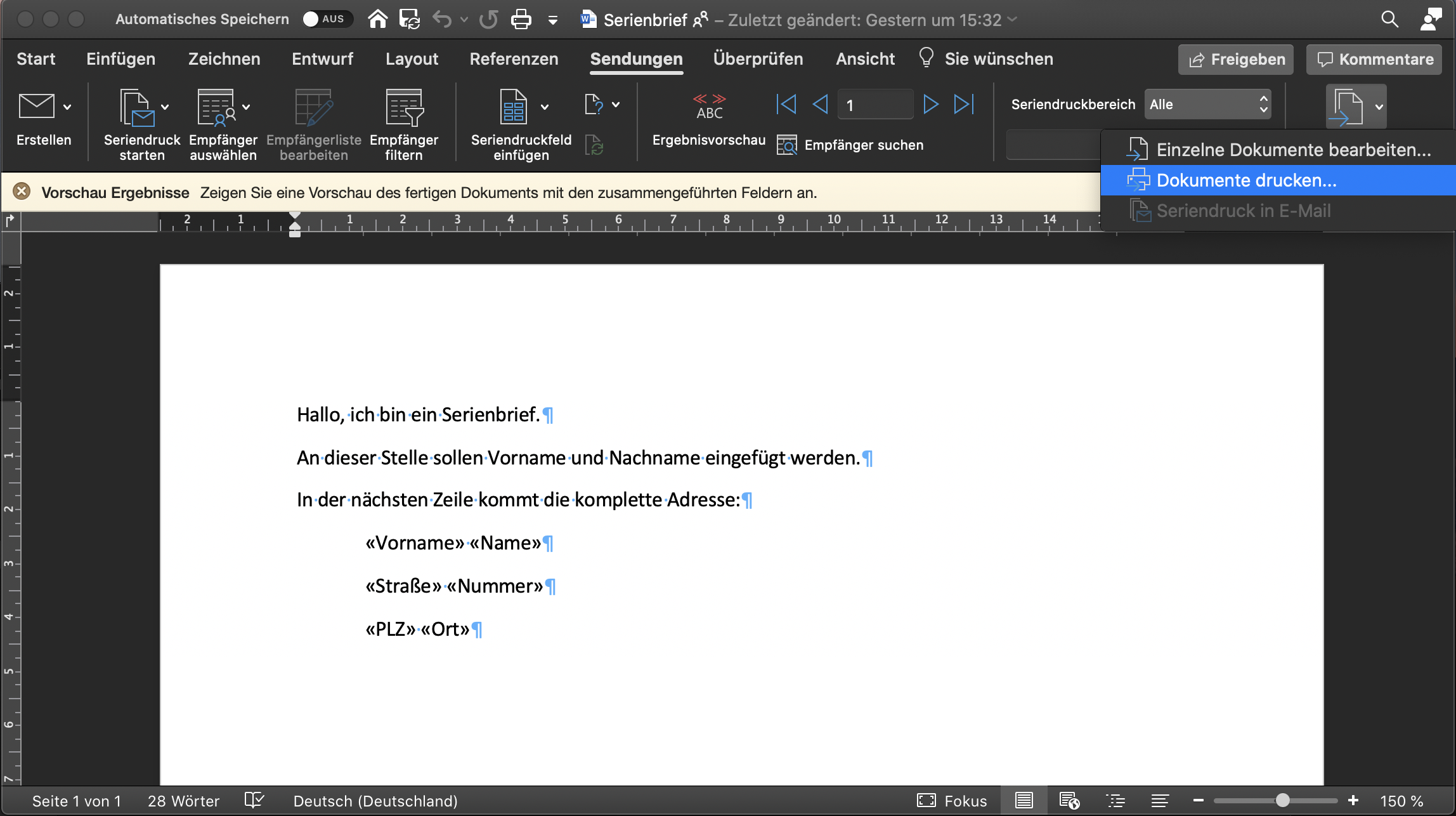
Since the data source only contains two addresses, only two pages are printed:
Conclusion
SharePoint is an extremely powerful tool. The use of the online variant is steadily increasing worldwide, supported by Microsoft’s cloud-first strategy. Nevertheless, the hope remains that working in the cloud, and especially directly in the browser, will be increasingly better supported. If you want to advance this process, give your vote on Microsoft User Voice, you’ll find the link at the top of the article.