Distributed Teams Connected: The Role of Employee Apps in Hybrid Work
Hybrid work requires new communication structures. How Employee Apps bridge physical distance and create digital closeness for teams
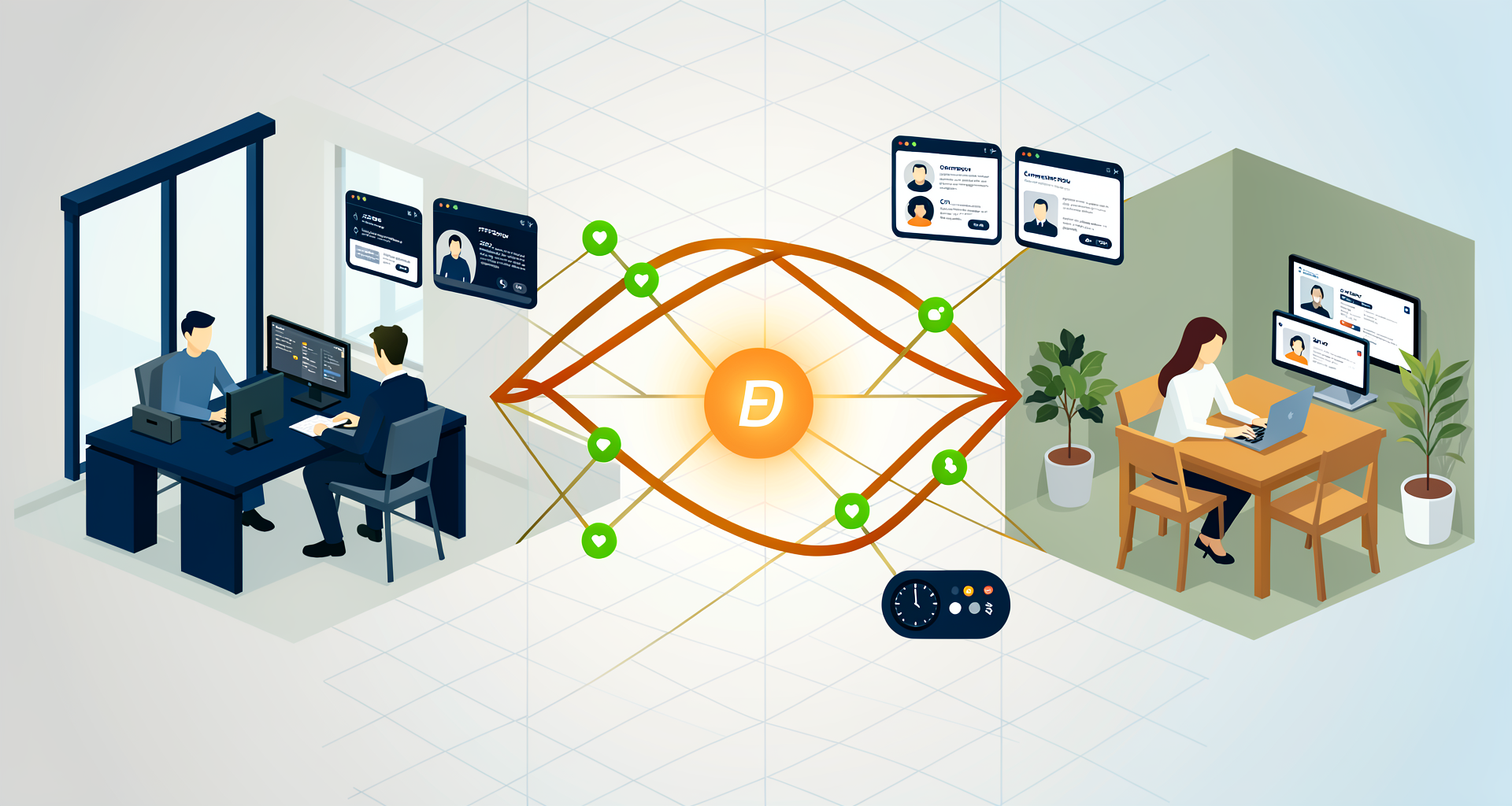
Hook: The Phenomenon of the “Zoom Gap”
Your team is spread across four locations. Some are in the office on Mondays and Wednesdays, others work completely remote, and still others switch flexibly. It’s 10:15 AM – half your colleagues are in a meeting, the other half are just starting to check emails from home. Then important information arrives: a new project update, a security notice, a reminder about tomorrow’s workshop. Where does this get communicated? Via Slack? Email? Teams? Or does it just sit in the intranet that nobody visits regularly?
This everyday situation is the core of the hybrid work problem: there’s no shared place where everyone has the same information at the same time.
Pain Points: Why Standard Tools Aren’t Enough
The problem gets worse the more distributed your team is. Asynchronous communication is necessary, but without central focal points, a two-tier information society quickly emerges: those in the office get details from hallway conversations. Those working remotely find out through roundabout ways—or not at all.
Adding to this: not all information belongs in the email stream. Some are too urgent (evacuation drill in the building?), some are too specialized for the entire workforce, some change daily. Traditional intranet structures are static. They create frustration rather than clarity—especially when your team has little contact with each other.
Solution: Employee Apps as Digital Closeness
A modern Employee App works differently. It’s not intranet 2.0, but a place your team wants to visit—because the information each person needs right now is there.
For geographically distributed teams, that means concretely:
Real-time information without delays: updates appear instantly for everyone, regardless of who’s in the office. The cafeteria schedule applies everywhere. The Christmas party announcement reaches people working from home just as much as colleagues on-site.
Digital recreation of physical proximity: Some teams use a news widget or welcome widget to start the day with a shared message. Others embed live updates – when something important happens in the company, everyone sees it at the same time, no matter where they are.
Low-barrier access: An app opens with a tap. The intranet only reaches people if they deliberately navigate to it. That makes the difference: information finds its way to people rather than the other way around.
Value for Everyone
For your HR team: flexible work models can be communicated transparently without losing overview. All locations, all shifts see what’s coming up.
For your IT team: the structure is centrally defined, content can be managed by editors themselves – without technical dependencies. Scalable to all locations and work models.
For your employees: they’re not left behind just because they’re not physically on-site right now. The same information, at the same time, on the same platform.
Conclusion: Hybrid Isn’t a Bug, It’s the New Reality
Distributed teams are no longer the exception. Your communication needs to match this reality – proximity shouldn’t be a privilege. An Employee App isn’t just a technical tool, it’s a signal: everyone belongs here.
The question isn’t whether your team works hybrid, but how you design it so it doesn’t feel “separated.”
Try it for free now – or tell us how your team is distributed. We’ll show you how Employee Apps make hybrid work seamless.